


Ever caught your reflection and thought, "Well, I don't look bad, I just look tired"? Not old, necessarily, but maybe a little heavy through the lower face, slightly shadowed along the jawline, a touch softer around the neck than you were a decade ago?
If you have, rest assured you're far from alone, and in nearly every consultation I have, the very next thing I hear is, "But I don't want to look like I've had work done." We've all spotted that overly tight, windswept, startled facelift look before a single word is spoken. So let me say it plainly: in a city where I've performed many thousands of facelift surgeries, that look has nothing to do with a facelift and everything to do with one done poorly. A proper facelift won't turn you into someone else, yet it should simply leave you looking so refreshed you might wonder whether you've just come back from vacation.
Everything you need to know about achieving beautiful, natural-looking facelift results!
What does a "natural" facelift result actually mean?
Natural facelift results can be summed up as looking like a rejuvenated version of yourself rather than someone who has undergone surgery and is now tight and pulled. You should retain all your features, but the effects of aging are gently eased; friends notice your new appearance and cannot pinpoint what makes you look more attractive.
In essence, it represents the difference between a restoration/rejuvenation and an alteration. Before becoming a surgeon, I was trained as a painter and sculptor, which has helped me to fine tune my artistic eyes for surgery. My goal is never to create tension on your face—it is to restore your natural facial anatomy, turning back ten to fifteen years so you look refreshed, never operated on.
There are four main qualities of natural facelift results:
- You still look like yourself with your signature smile, eye expressions, and other features.
- Your face is not pulled in any way, there is no side tension, over-stretched cheeks, and "wind tunnel effect" on the hairline.
- Transitions are flawless without any marks of surgery and stretched skin.
- You get used to it within a couple of weeks and do not see anything unnatural anymore.
Why do some facelifts look "done" or pulled?
A pulled look comes only from lifting skin on its own by tightening the surface when the deeper structure should be doing the work. Support that foundation, and the result always looks natural.
Let's talk about anatomy, because it is important to understand how a lift should be done. Beneath the skin lies a layer of tissue called SMAS that acts as a scaffold supporting the soft tissue of the face in its shape. Over time, collagen and elastin break down, causing the scaffold to lose its strength leading to sagging of the soft tissue, and a gradual formation of Jowls and neck laxity. A face that is changed from a heart-shape to a more square-like.
Think of an old, sagging mattress. A deep plane facelift rebuilds the wooden support frame underneath, so the whole bed sits firm and holds for years. A skin-only lift just pulls the bedsheet tighter over that same broken frame—it looks smooth briefly, but soon sags and wrinkles all over again.
This is precisely what happens during a proper deep plane face lift. The underlying structures are released and repositioned correctly, and the skin follows without being stretched.
What actually creates natural facelift results?
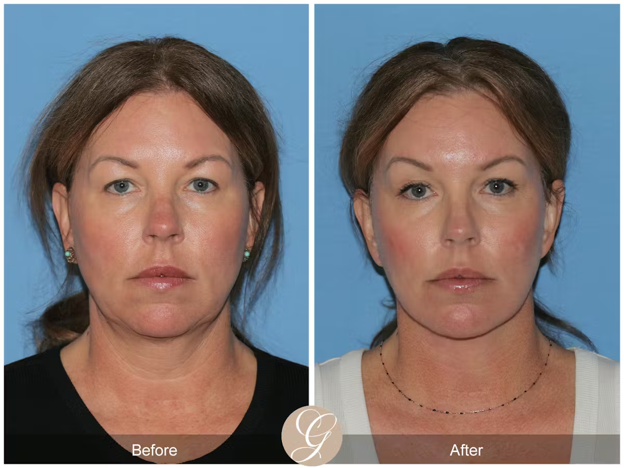
The natural outcomes are achieved by operating beneath the skin level, lifting along the correct vectors, and preserving the volume. My personal technique, which I have developed and published, is called the Preservation Deep Plane Facelift. It incorporates the following elements:
- Raise the deeper layer and forget about the surface. Once the deeper structures carry the load, the skin will fall into place without any pulling effect and therefore, any signs of unnatural tension and tightness of the ears and forehead.
- Raise vertically and do not pull horizontally. Your face sags down with time, hence its lifting should take place along a vertical vector. Horizontal traction causes a windswept look.
- Reposition volume and preserve it instead of removing. The aging process involves not only the sagging but also the deflation. The fat pads of the cheeks fall down and cause emptiness in the midface region. Repositioning of the lost volume will help restore the characteristic heart shape of the face. Any excessive removal of tissues will result in the drawn appearance of a face.
- Tackle the neck and the face together. You will never get the perfect jaw line on top of the loose neck. Hence, treatment of both the platysma muscle and neck should be performed.
- Ensure the absence of scars. Incisions should be made at strategic places where they will eventually become invisible, such as the lines of natural wrinkles or the hairline.
Finally, something that an instrument can do nothing about – the surgeon's eye. Each millimeter matters as it requires proper estimation and understanding of the appropriate quantity of lifting to achieve the desired effect.
Can fillers, Ultherapy, or thread lifts give natural results instead?
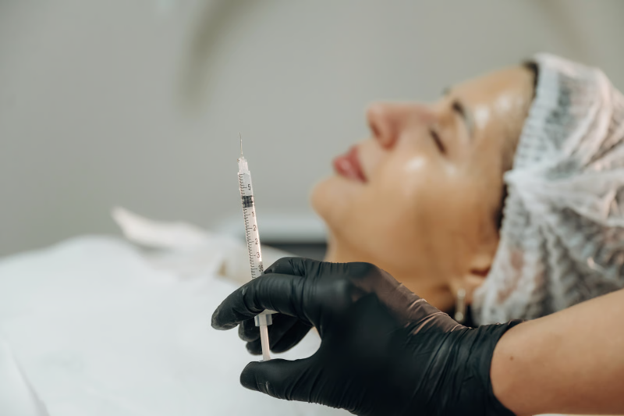
Yes, for mild early changes there are non-surgical solutions that do work and that I apply myself; however, if the facial tissues are already structurally sagged and hanging, even an experienced facelift surgeon will have to tell you truthfully: nothing can lift the tissues that gravity has let drop – there is no magic fillers, energy-based devices or threads that can do this job.
Fillers restore lost volume, but too much filling in a sagging face is likely to lead to an artificial, "overfilled" look, which is, in my opinion, worse than having absolutely nothing done. Energy and ultrasound devices tighten the facial skin slightly, but cannot lift anything since they cannot restructure the SMAS layer of the skin and move fat pads.
As for thread lifts, they lift only for a while, after which the effects wear off in just several months; additionally, they may cause a dimpled appearance of the skin. Thus, ironically, the most natural effect in many cases is obtained through an invasive approach rather than through a "natural look and no surgeries" one.
How long until a facelift looks natural?
It takes about 2-3 weeks for most of the patients to achieve a natural appearance. This process lasts for up to 6 months, which is when swelling totally disappears.
In the first days after the operation, swelling and tightness of the facial skin are normal since your tissues will take time to relax; in a month, you are likely to feel more comfortable and look like a rested person.
How do you choose a surgeon for natural results?
This is the biggest decision you'll ever have to make, so base your choice not on credentials but on aesthetic sensibility. Go with:
A facial expert. The facial surgeon spends all of their time observing subtle differences and can spot things that others can easily overlook.
A deep-plane technique. Make sure they explain how they perform the deep plane lift and what vector they use.
Photo galleries that feature realistic results. Your goal is to appear refreshed, not surgically tightened. Tight skin on after-pics means tight skin on your face, because that's what your doctor's doing.
An open discussion. A surgeon who dissuades you from having the procedure or gives you something else you didn't ask for will likely do everything possible to protect your result.
The bottom line
Natural facelift is no less extensive than the traditional procedure. In fact, it requires more precision and experience since the procedure is performed underneath the skin layer and lifts tissue in the proper direction. This approach ensures optimal preservation of fat deposits and natural facial contours that remain intact even decades later.
Natural facelift isn't your new face – it's your face restored back to its best form.
You don't need a surgical result – you need natural-looking rejuvenation.
If you've been contemplating whether your face needs such treatment or not, and you need guidance on your options, schedule a consult and I'll show you what is natural.
Frequently Asked Questions
Can a facelift look completely natural? Yes. A facelift that lifts the deep structural layer of the face — rather than pulling the skin — produces a natural, refreshed result. You look like a rested version of yourself, not a tightened or altered one.
What makes a facelift look "done" or fake? The pulled, "done" look comes from skin-only lifting or pulling the face sideways toward the ears. A natural result lifts the deeper SMAS layer vertically, so the skin redrapes without tension.
Does a deep plane facelift look more natural than a traditional facelift? Generally, yes. A deep plane facelift repositions the deeper structural and fat layers, restoring natural contours and volume, while a skin-only lift relies on surface tension that can look tight and fade faster.
How long does it take for facelift results to look natural? Most patients look natural within 2 to 3 weeks, with results continuing to refine over 3 to 6 months as swelling resolves and the tissues settle into place.
Can non-surgical treatments give natural results without a facelift? For mild, early aging, dermal fillers and energy devices can help. But once true sagging and jowls develop, no filler, thread, or device can lift descended tissue — and overusing them often looks less natural than surgery.