A Tailored Approach to Feminine Rejuvenation

A woman’s face evolves with time, gracefully, but not always on your terms. You might notice skin that once felt firm beginning to soften, deeper folds forming where smiles once lived, or volume loss that subtly reshapes your reflection. Dr. Kevin Sadati understands that facial rejuvenation is more than “turning back the clock”; it’s about helping you feel like yourself again. With thousands of facelifts performed and a background in sculpture, he offers elegant, natural results that preserve your femininity, not alter it.

Intro background
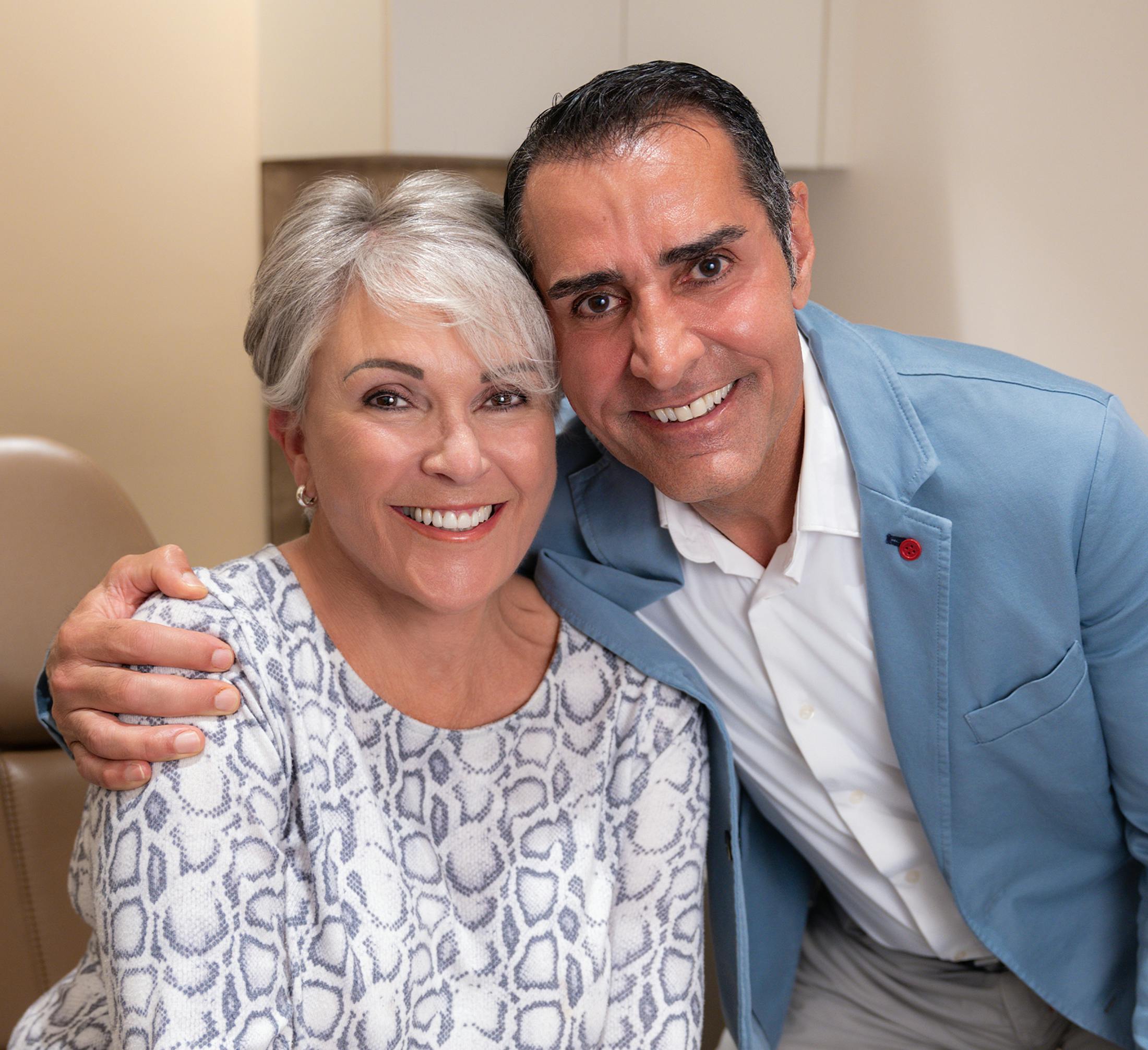
Dr. Kevin Sadati standing next to female patient in office with arm wrapped around her shoulder

*Actual Patient

How a Female Facelift Is Unique

Facelifts for women are crafted with a different vision—one that prioritizes delicacy, softness, and balance. While male facelifts focus on stronger lines and angles, female facelifts require a subtler hand to:

  • Gently restore volume in the cheeks and midface
  • Lift without over-tightening, maintaining graceful curves and movement
  • Preserve a soft jawline while refining definition
  • Address deeper signs of aging while respecting skin thickness, hormonal changes, and individual aging patterns

From choosing the right vector of lift to carefully placing incisions within the hairline, Dr. Sadati tailors each technique to ensure the results enhance, not erase, your natural beauty.


Half image accent

Discover the Possibilities Schedule a Consultation

Contact Us
Background media

Why Choose Dr. Kevin Sadati?

Dr. Sadati is internationally recognized for his artistry and innovation in facial rejuvenation. His signature techniques, including the Natural Facelift and Triple Layered SMAS Plication, have changed how surgeons approach the aging face. With 22 years of experience, over 5,000 facelifts performed, and a loyal following of women in their 40s through 70s, Dr. Sadati is trusted for his ability to create results that look soft, fresh, and never “done.” At his boutique Newport Beach surgical suite, you’ll receive care that’s private, personalized, and refined.

Banner media

Schedule Your Consultation Now

Whether you’re just beginning to consider surgery or ready to take the next step, schedule your private consultation with Dr. Sadati and explore what’s possible.

Additional References:

Frequently Asked Questions

What makes a facelift for men different from a facelift for women?

Facelift surgery for women differs from that for men primarily because of differences in aesthetic goals and patterns of facial anatomy. Emphasis is placed on softness and balance with restoration of volume in the cheeks and midface, avoidance of excessive tightening and maintenance of smooth, elegant contours of the jaw. The result is a youthful appearance consistent with, but not exaggerated beyond, feminine characteristics. In contrast, surgical emphasis for men is on structural aspects of facial form and avoidance of excessive smoothing of contours. This produces a less-rounded, more-angular appearance appropriate for the relatively limited degree of scalp coverage present in men. Surgical management also must accommodate patterns of facial hair growth and influence the extent and location of incisions. Overall, techniques of facelift surgery are modified to achieve an appearance that is both natural and compatible with the patient's underlying configuration of facial bones and gender characteristics. This approach contrasts with application of a single, standardized technique of facelift surgery.

Will a facelift still look natural and feminine?

Keeping you looking soft, fresh and never finished is the ultimate goal of a well performed facelift surgery. With careful selection of vectors of lift and avoidance of excessive tightness, he preserves the natural movement and elegant contours that make your face individually unique, rather than eliminating these characteristics in the pursuit of maximal tightness. The result is a more rested and vibrant appearance, not a stretched, tight or windblown appearance that suggests surgical intervention. Special attention is given to maintenance of distinctly feminine characteristics, including soft volume of the cheeks, a gently contoured jaw and natural expression of the eyes and mouth. No structures are flattened or overcorrected, and your face retains its individual character with an appearance of greater health and youth. Consequently, observers are unaware that surgery has been performed and perceive only that you appear well rested and radiantly beautiful.

What areas of the face does a facelift normally address?

A deep plane facelift will lift the midface, refines the jawline and smoothes the lower face and neck all at once to provide a more comprehensive approach to aging than previously available techniques. In contrast, a traditional SMAS facelift provides only moderate improvement of the lower face and neck and leaves major structural changes untreated. An excellent facelift results regardless of technique will bring a softer skin, removal of deeper folds and volume loss that progressively alter your appearance over time to a more youthful configuration, rather than simply tightening the surface. In many instances, improvement of the upper face with a brow lift is also appropriate, because treatment of the lower face alone results in an unbalanced, partial correction rather than true harmony of facial features. Finally, the areas treated are carefully adapted to the pattern of aging, facial anatomy and aesthetic goals to achieve complete, natural integration of all facial components.

What is the best facelift technique for women?

The optimal technique always depends on your anatomy and on the specific signs of aging you wish to correct. As a result, every procedure is individually customized, and not offered as a one-size-fits-all approach. Our results with the triple layered SMAS plication are particularly appropriate for mild aging, whereas the newer technique of preservation facelift represents a highly advanced deep plane approach with substantially greater overall results for patients with more severe concerns. Comparison of these techniques is somewhat analogous to comparison of an iPhone 10 with an iPhone 17. Both are excellent, but one represents a major evolution in technology and results. At the time of your consultation, we will evaluate your quality of skin, configuration of bone and extent of concerns, and will recommend the approach that provides optimal preservation of your femininity and achieves the degree of rejuvenation that is appropriate for your needs, without resorting to more surgery than is actually required. Read more about the classic method on the Natural Facelift page.

Do hormonal changes and menopause influence facial aging?

Yes, the answer to this question is unequivocal. Declining estrogen at menopause reduces collagen production, impairs epithelial cell turnover and accelerates loss of facial fat pads and bone density. These effects accelerate loss of volume, thinning and laxity of the skin. Women lose substantial amounts of skin collagen within a few years after the onset of menopause, and this accounts for the apparent acceleration of facial aging at this stage of life. A well planned facelift compensates for these hormonal changes by restoring lost volume and providing support to the skin from within, instead of merely tightening the skin, it will lift the deep layers for natural and comprehensive results. The individual patterns of thickness, hormonal status and age related changes are carefully incorporated into the design of each operative procedure. This results in treatment of the actual tissue responsible for facial aging, rather than only improving what is apparent on the surface tissue.

Can a facelift restore facial volume that I've lost over time?

Restoration of softness and volume of the cheeks and midface is an essential component of a deep plane facelift. Instead of merely tightening skin, we reposition and support deeper tissues to restore them to their original youthful position and provide natural contours and degree of volume that cannot be achieved with simple skin tightening. Complementary techniques such as fat grafting further increase volume to correct areas of insufficiency of structural support and achieve a fully balanced result. As a result, we achieve a more complete rejuvenation of both tissue position and volume. The appropriateness of additional volume restoration for each patient will be discussed during the clinical consultation and individualized to reflect the unique pattern of anatomy and aging for each patient, rather than to a standard, uniform protocol. Midface fullness can also be managed by looking into the details on the Buccal Fat Removal page.

Where are the incisions placed during facelift surgery, and will the scars be visible?

Incisions are made in the natural anatomic landmarks of the face and extend along the temporal hairline, around the ear and into the crease behind the ear where they are readily camouflaged by the configuration of the ear and the hairline. This results in minimal tension across the incision and facilitates excellent maturation of the scar during healing. Careful attention to the design of incisions and deep plane approach will contribute to healing of these lines that is as inconspicuous as possible. Most patients experience complete resolution of their incisions to fine, hairline-like scars within several months and achieve excellent cosmetic integration with their normal skin texture and color.

What age do most women get a facelift?

Most of Dr. Sadati's female patients are between the ages of 40 and 70, but there is really no single appropriate age for this procedure. Each woman's experience of aging is unique and influenced by genetic factors, lifestyle, exposure to sun and hormonal changes over the years. Patients in their 40s generally show early softening of the jawline or mild volume loss that is ideally treated with a more conservative and subtle approach. Women in their later decades require greater amounts of laxity correction or cervical contouring and are best treated with a deep plane facelift, a more comprehensive approach to restore an overall sense of balance. Finally, the optimal timing is less dependent on age as reflected on a birth certificate and more on the quality of skin, patient expectations and the stage of individual experience with the aging process. This issue is thoroughly discussed with each patient during the preoperative consultation.

How long is recovery, and how long will my results last?

Recovery depends on the techniques used, but most people resume normal activities within about two weeks, with further refinement and stabilization of results over the next several months as edema resolves and tissues achieve their final positions. The surgical approach of Dr. Sadati also includes comprehensive post-operative care to accelerate and maximize healing, including hyperbaric oxygen, photobiomodulation, peptide supplements, intravenous hydration with vitamins and care by a dedicated post-operative nurse. These measures reduce edema, facilitate recovery of tissues and provide a more comfortable and rapid course of healing. Because my techniques elevate the deeper tissues of the face and not merely pull on the skin surface, results are long lasting with better healing and produce an appearance of graceful aging. During your consultation, I will provide a complete individualized plan for recovery and for the long-term appearance of results.

Half image accent
Accessibility: If you are vision-impaired or have some other impairment covered by the Americans with Disabilities Act or a similar law, and you wish to discuss potential accommodations related to using this website, please contact our Accessibility Manager at (949) 694-7657.
Contact Us