

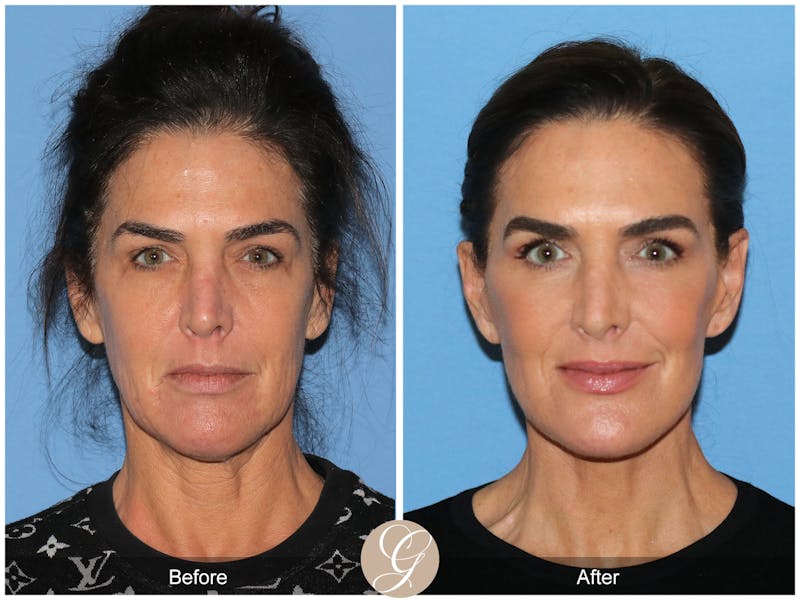
When people start looking into facelift surgery, one of the first terms they run into is the term SMAS. It may sound technical, but it’s straightforward. The SMAS is the layer like a scaffold under the skin that supports the soft tissue of the face.
In the early days of facelift surgery, over a hundred years ago, surgeons focused only on the skin. They would remove a small amount and pull it tighter. It looked good at first, but the results didn’t last. Skin is elastic. It stretches, and over time, everything relaxes again.
Things changed in the 1970s when surgeons began working with the SMAS layer instead. This layer is stronger and more stable than skin. It acts like a scaffold that holds the facial tissues in place. When you lift and reposition the SMAS, the results last longer and look more natural.
That’s why, when surgeons talk about facelift techniques, we’re really talking about what is being done to the SMAS. Some techniques tighten it by folding it onto itself, called SMAS plication. Others remove a portion and secure it in a new position or SMAS imbrication. These are variations of what’s known as SMAS lifts.
A deep plane facelift goes further. Instead of just tightening the SMAS, I release the retaining ligaments that hold the face down. Once those attachments are released, the deeper tissues can be lifted and repositioned as one unit.
This is where you really see the difference. When everything moves together, the result looks natural. There’s no pulling, and the tissues settle the way they should. I usually compare it to making a bed. If you pull the sheet from one side, you end up with wrinkles. But if you lift it and adjust it from underneath, everything lies flat.
Another important point is that the face and neck are connected. They are not separate areas. What happens in the face directly affects the neck. As the deeper support layer loosens with age, the neck begins to sag, the jawline softens, and fullness develops under the chin.
The neck tends to age faster than the face. The skin there is thinner and has fewer oil glands, so it loses elasticity more quickly. At the same time, the platysma muscle, which is a thin sheet of muscle in the neck, starts to separate and drop. This leads to banding and what many people describe as a “turkey neck.”
A lot of patients take great care of their skin with good products and sunscreen, which is important. But skincare only affects the surface. The deeper layer, the SMAS, continues to loosen over time no matter how good your routine is.
That’s why treating only the face and ignoring the neck doesn’t work. The two have to be addressed together to create a balanced and natural result.
When it comes to fullness in the neck, not all cases are the same. Some patients have a small amount of fat just under the skin. In those cases, something simple like liposuction may help. But in many patients, the issue goes deeper. There can be fat under the muscle, muscle laxity, or other structural changes contributing to the heaviness.
During surgery, I evaluate all of these layers. The superficial fat can be reduced, deeper structures can be refined, and the platysma muscle can be repositioned. The goal is to create a clean jawline and a smooth transition from the chin to the neck.
If someone only has a small amount of superficial fat, a less invasive approach may be enough. But if deeper structures are involved, a full neck lift or lower face and neck lift is the right solution. I’m always very honest with patients about what will and won’t work, so expectations are clear from the beginning.
At the end of the day, modern face and neck lifting is about working in the right layer and understanding how everything is connected. It’s not about pulling tighter. It’s about restoring structure, so the face and neck look natural, balanced, and in harmony.
That’s what creates results that don’t look operated. They just look right and are undetectable.